 alt="logo">
The Waswahili Community Trust UK
(Wadhamini wa jumuiya ya Waswahili)

|
alt="logo">
|
The Waswahili Community Trust UK |
|
The coming of the new baby is a very welcome event among the Swahili, as it is among all Muslims. One old ceremony is called"tangazi",which means 'a mixture of things'.
A whole lot of food-rice,peas,maize,millet,groundnuts and beans are cooked together in a large pot when the women is about eight months pregnant, and this meal is taken to the mosque.
There all those present may share in eating it, after the midday prayers, and in return they pray for an easy delivery for the women. As the day of the delivery approaches,different herbs and foods are brought to the house:

Almost as soon as the the baby is born a a drop of honey and aloes is put in its mouth.Honey is sweet and aloes are very bitter.
The combination is supposed to be sybolic of the kind of life the child will have in this world - happy times and unhappy times. Either a teacher or the father, or a friend, holds the baby up and recites into its ear the traditional call to prayer.
So from the moment of birth a Muslim is instructed in the basic teachings of the faith. It is a form of baptism into Islam.
Seven days after its birth the baby is taken out of doors for the first time. One reason for this is to show the baby the sun - a ceremony found among other peoples in Kenya.
In addition, a coconut is ceremonially broken and its milk sprinkeled over the baby. This is an indirect way of taking God to shower the baby with blessings and prosperity. The parents then distribute roast millet, sweet-meats and money among the children of the neighbourhood.
he baby is carefully guarded during early days. One danger particularly feared is from evil spirits who might wish to harm the baby or even steal it and replace it with an ugly child.
The evil spirit feared is called Babaye Watoto (children's grandfather). He is said to come in the form of an owl, so the baby has to be protected by amulets (charms) worn on the wrist or arm, or hanging round the neck).
In the evening its face is covered with soot to make it look unattrative. A scarcecrow is made of wood, covered with rags, capped by an earthen pot and put onto the root of the houseto scare away "Babaye Watoto".
The baby is normally named before it is seven days old. The traditional method of naming is for parents and relations to write several names on pieces of paper. (In the old days coconut palm leaves were used, which gives the ceremony its name - "kikuti".
The child is encouraged to touch one of the pieces of paper, and thus to choose his own name. Circumcision can take place at any time after the age of seven days, though it is not unknown for a boy to be approaching puberty before he is circumcised.
Circumcision among the Swahili is not linked to any age set system as it is among other people. It is merely a custom. Among wealthy people the ceremony is accompanied by a feast and traditional dancing, such as "Lelemama";in this the women, dressed alike, stand on a wooden platform and make rhythmic movements, accompanied by a brass trumpet and brass pans struck by two small reeds.
The Swahili, as Muslims look upon marriage as a great event in the life of a person. By Western standards, Islam recommends an early marriage. Girls and boys may be married as soon as they reach puberty, and traditionally marriages are arranged between families.
A marriage involves not only the two persons - bride and bridegroom - but their families and even extended family. It is therefore a way of strengthening good relations between the two families.
Often parents look for a fairly close relative for their daughter or son to marry. Cousins marriages are allowed and are quite common. Many an uncle or an aunt has felt hurt when a niece or nephew married an 'outsider'.
Thus a young man will have a bride recommended to him by his parents; if he has a girl of his own in mind, he may ask his parents to learn more about her character. If the report is favorable, the family of the young man will sound out the family of the girl.
When both parties are agreeable, the boy's parents go to the girl's house and formally ask for her hand in marriage. The two fathers come to an agreement on the amount of dowry to be paid, and fix a day for the wedding.
For months or so before the wedding day a great preparations are made; they buy large quantities of rice, goats and other foods for the various feasts that will take place.
They hire extra cooks. A team of ladies goes round houses issuing invitations. For a week or more before the ceremony there is a music and dancing, ant the neighbourhood rings with the intermittent throbbing of drums in the daytime, and with the sound of trumpets and brass pans in the evenings as the ladies dance the 'lelemama.'
If the family can afford it, there may be a sword dance performed by two lines of dancers, each with a sword which he twists and twirls to the rhythms of the music; and from time to time two dancers, one from each line, meet in the middle for a mock sword fight.
The religious ceremony takes place in the mosque in the evening after the evening prayers, or after the last prayers, or after the last prayer of the day.
The bridegroom and his immediate relatives as well as the bride's immediate relatives dress spendidly - but the women are not allowed in at all. A kadhipresides over the ceremony.
After prayer and the reading of verses from the Koran and sayings of the prophet Mohammad emphasising the benefits of marriage, he ask the bridegroom and the bride's father to come and sit on each side of him.
With frankincense and sandalwood burning near them, the ceremony is performed. The kadhiask three times if the bride's father is willing to let the bride marry the bridegroom for a dowry of so much money, and he asks the bridegroom if he is also agreeable.
The wedding feasts last for some days, and involves many meals and exchanges of gifts. Some wedding can be very expensive. On her wedding night the bride is dressed in her bride clothes.
She is taught in advance by a 'nurse' how to behave on the night. If it is her first marriage,she is expected to be virgin, since tradition and religion forbid any sexual relations before marriage.
When somone is dying, the last rites of Islam are performed. A mwalimu (reacher of religion) reads the Koran near the death-bed and from time to time ask the dying person to remember God and recite the shahada ('There is no God but Allah and Muhammad is his Prophet').
After death a hole is dug under the bed. The body is washed by the traditional washer mwoshaon his bed, so that the water flows into the hole beneath.
The body is then covered in the white unsewn materialcontaining certain herbds and sweet-smealing oils or perfume. Meanwhile the mwalimusits outside the house with a group of his pupils,reciting the Koran; and friends and relations gather to take the body first to the mosque forprayers, and the to the cemetery.
As a Muslim grave is always constructed so that the head faces the holy city of Mecca. When the person has been buried, a special prayer is said for his soil. Some water is sprinkled on the grave and a couple of stones or branches are placed at the head.
After the last prayers relatives and friends gather in the mosque for a special recitation of the Koran for the soul of the dead person.
If the dead person was married man, his wife goes into period of mourning of four months and ten days, during which time she is confined to the house and avoids wearing ornaments or beautiful clothes.
The most important festivals are the religious ones. First there are the two Idd festivals:
The first means the festival of the breaking fast. In other words it come at the end of the holy month of Ramadhan, during which Muslims fast from dawn to dask, during the whole of the ninth month in the Muslim calenda.
The festival lasts three days, during which relations and friends visit and congratulate one another, presents are exchanged, new clothes are bought - especially for the young people. In town, fun fair are held and musical bands are entertain the poor.
Idd-ul-Hajj celebrates the pilgrimage to the holy Cities of Mecca (the birth-place of Mohammad, and therefore of Islam) and Medina (the burial place of Mohammad).
It is expected of each Muslim to perform the pilgrimage (or Haj) at least once during his or her life, if he or she is able, physically and mentally, to do so. One feature of the festival is the sacrice of goat, sheep, camel or cow, and the distribution of the meat among friends and relations, and poor.
Fiends visit one another, again in new clothes, they eat together, and attend fairs. Idd-ul-Hajj takes place on the tenth day of the twelfth month in the Muslim calenda.
A third festival is the Maulidi,the celebration of the birthday of the Prophet Mohammad. In the major towns processions are held in the afternoon with bands playing, drums throbbing and Muslims chanting songs in praise of the Prophet Mohammad.
In the evening the celebration is held in brightly lit and gaily decorated mosques. It consists of the recitation of the traditional story of the Prophet's birth.
The most famous famous Maulidiis held in Lamu, the great centre of Muslim learning in Kenya. Muslims from all over East Africa, the Comoro Islands, Malawi, Somalia and beyond flock every year to Lamu to participate in the various ceremonies, dances and festivals.
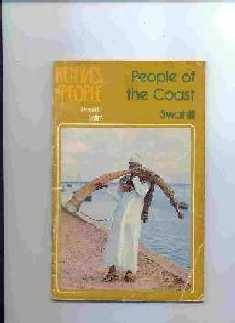
Source: People of the Coast Swahili
We appeal for your donation for our charity
Comments and suggestions to improve this website
Your suggestions or concerns about our services
Please send you contributions using form to contact us.
| Thank you Asanteni |
|---|
Copyright© March 2003: The Waswahili Community Trust (UK)
Registered Charity:1083065